[Interview] Kingdom: The Return of the Great General is a Major Hit – A Deep Dive into the Success of Director Shinsuke Sato, Master of Live-Action Adaptations of Manga
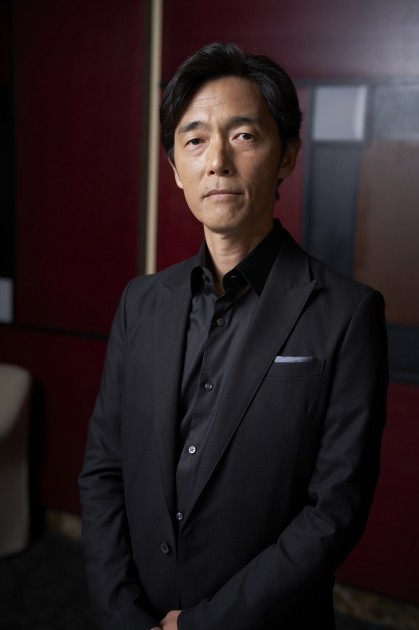
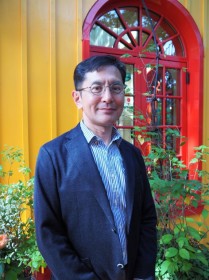
Director Shinsuke Sato (Photo by Natsuki Matsuo) (C) ORICON NewS inc.
–– How did you transition from making independent films to commercial ones?
Sato:
The PFF has a scholarship for award-winning directors to create new works and potentially release them in theaters, but I didn't pass the scholarship selection, so I couldn't make a commercial film for about three years.
–– Did you struggle financially during that time?
Sato:
I was often invited to screenings, and my fourth independent film from university, "Seimonmaeyuki," was shown as a late-night feature at the Theatre Shinjuku. A producer who saw my independent films approached me about working together, and we started brainstorming ideas. From that connection, I began directing late-night dramas and was asked to write a script by Director Jun Ichikawa, who had been a judge at the PFF where I won the award. I was incredibly busy. My debut as a screenwriter was with "Tokyo Yakyoku" (1997), and from then on, I received various screenwriting jobs, including working with Director Isao Yukisada on "Himawari" (2000). As a screenwriter, my career was progressing smoothly, but I couldn’t make my directorial debut in commercial films for quite a while.
–– So, in an unexpected way, you were able to fulfill your dream of becoming a writer.
Sato:
When writing scripts for projects directed by others, I could understand the director's intentions and incorporate my own essence into the final product. Those films were eventually released. However, when it came to my own films, things didn’t go as smoothly. I often wondered what I was doing wrong. My 20s were filled with such doubts, and I felt pressured to direct at least one film before I turned 30. I eventually changed my approach and asked a producer if I could direct a film for which I had been asked to write the script. Fortunately, there was an original script that didn’t have a director assigned yet. I showed the producer my previous independent films to pitch myself, and they agreed right away. That’s how I got to direct and write my commercial debut, "LOVE SONG" (2001).
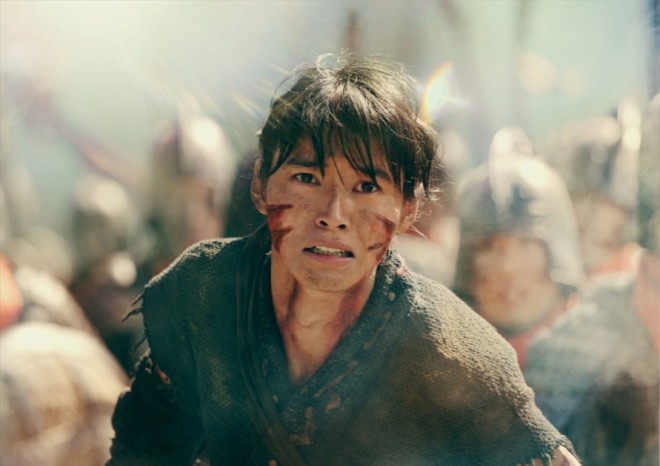
Xin (Kento Yamazaki) (C) Yasuhisa Hara/Shueisha (C) 2024 Kingdom Film Production Committee
–– Thus, the film director Shinsuke Sato was born.
Sato:
Well, I made my debut, but I still struggled to effectively communicate what I wanted to do. When asked, "What kind of films do you want to make?" I found myself wanting to create films that went beyond the everyday life I depicted in my university independent films, movies that captured the excitement I felt as a child. But I couldn’t express that desire in words. When I said, "I want to make interesting films," the response was often, "That doesn’t really tell us what you want to do." For me, interesting films included Westerns or action-adventure films like "Indiana Jones," but the response would be, "That’s impossible in Japanese cinema." Even when I said I wanted to make entertainment films, the reaction was often lukewarm. I couldn’t come up with a pitch that excited producers.
One producer once said to me, "If you want to make films that evoke emotions like fear or laughter, I can understand that." I realized that I hadn’t been watching films with that perspective. I started questioning myself: Do I want to scare people with my films, make them laugh, or what? After some thought, I concluded that I might want to see and show scenes of duels, probably because I grew up watching Westerns. There’s excitement and drama in those moments. Thinking back, all the films I liked had some form of conflict. In screenwriting, I would always create conflicts between characters A and B and let the story unfold from there. But if I mentioned "Westerns" or "duels," it likely wouldn’t resonate. To make it more understandable, I needed a more relatable keyword, which I eventually found: "action."
At that time, in the late 90s, the term "action" was strongly associated with Hong Kong cinema, and not much action was being made in Japan. So when a producer asked me, "What do you want to do next?" I said, "I want to make an action film," and it clicked immediately.
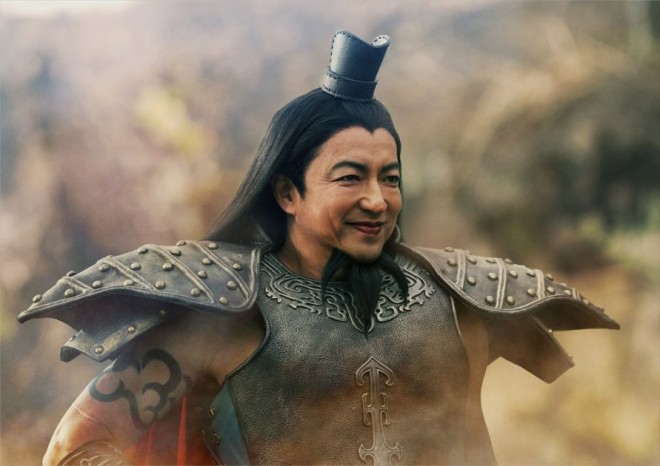
Ou Ki (Takao Osawa) (C) Yasuhisa Hara/Shueisha (C) 2024 Kingdom Film Production Committee
–– Your second commercial film as a director was "The Princess Blade" (2001), a sci-fi action film starring Yumiko Shaku, with action direction by Donnie Yen and special effects directed by Shinji Higuchi.
Sato:
This film marked a significant turning point for me. My previous works, such as the independent films and "LOVE SONG," were movies set in the real world. The scripts I wrote, including "Tokyo Yakyoku," were mainly coming-of-age stories or love stories. So many people were surprised when I suddenly made an original sci-fi action film. It was the first time I was able to challenge myself with something I really wanted to do in a commercial film. There were areas where I felt I could improve, but it was a step forward.
Source : ORICON NEWS

Related News
[INTERVIEW] "Inside Out 2" Becomes a Global Hit with Relatable Adult Emotions: Interview with the Director & Producer
Director Kelsey Mann and producer Mark Nielsen, who visited Japan in mid-July, expressed their excitement i...
![[INTERVIEW] "Inside Out 2" Becomes a Global Hit with Relatable Adult Emotions: Interview with the Director & Producer](/upimg/thumb/1000/1345/img280/195dac8340d3cba187878afff7a9a94c.jpg)
[Look Back Author Cries] 'Chainsaw Man' Author Brought to Tears by Success of 'Look Back': "I May Never Have Something Made wit...
With the success of the animated film "Look Back" (released on June 28), a thank-you comment from the origi...
![[Look Back Author Cries] 'Chainsaw Man' Author Brought to Tears by Success of 'Look Back': "I May Never Have Something Made with Such Sincerity Again in My Life"](/upimg/thumb/1000/1079/img280/96f8a39ca5aebe5cf7f299f847f18c1d.jpg)
Exclusive Interview: Ghibli's Director Goro Miyazaki's 'The Boy and the Heron' Exhibition: Studio Ghibli Will Continue to Pursu...
At the 77th Cannes International Film Festival held in France in May, Studio Ghibli was awarded the honorar...
【Japan Music Chart】 'Kingdom' Movie Theme Song ONE OK ROCK's 'Delusion' Tops Oricon Charts
ONE OK ROCK's "Delusion " recorded 11,513 downloads in its first week, securing the number one spot in the ...
【5 Photos】 Kingdom: The Return of the Great General Visual Book Released on the 12th, with Some Still Photos Unveiled
The visual book for the latest film in the "Kingdom" series, "Kingdom: The Return of the Great General" (re...
Wes Ball, Director of "Kingdom of the Planet of the Apes," Selected to Helm Live-Action "The Legend of Zelda"
Since its debut in 1968, "Planet of the Apes" has spawned numerous visual works, influencing various fields...

【Manga】 Kagurabachi Vol. 3 Release Praised by 'NARUTO' Author: Japanese Sword Battles are "Something Manga Lovers Will Love"
The third volume of the manga 'Kagurabachi' (Author: Takeru Hokazono) was released on the 4th, and Shueisha...