INTERVIEW: Agatha Christie's Masterpiece Gets First-Ever Manga Adaptation – Young Artist Behind the Project Shares Insight: “Its Legacy Gave Me Strength”
Using Pacing and Visual Cues to Capture the Essence of Mystery
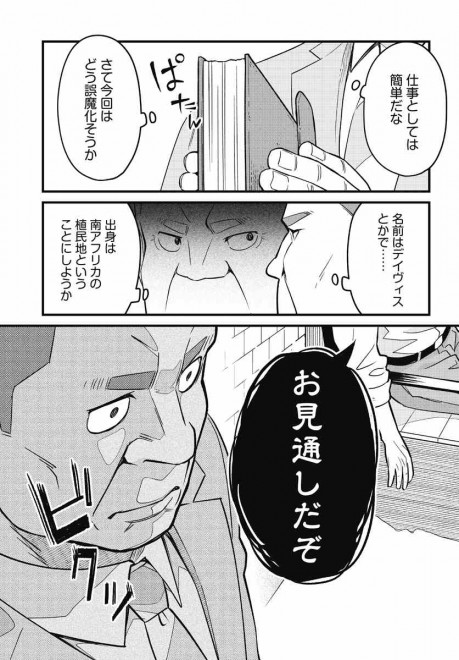
From the manga adaptation of And Then There Were None (© Hayakawa Publishing)
— What did you focus on to capture the essence of And Then There Were None in manga form?
Nikaidō: One thing I prioritized was using ma—the Japanese concept of space or pause—to create a sense of suspense. For instance, a scene that’s just a room change in the novel becomes a slow ascent up a staircase or a silent walk down a corridor in the manga. These pauses create psychological pressure unique to mystery stories.
— Those quiet movement scenes really did convey tension.
Nikaidō: I also paid close attention to visual flow—guiding the reader’s eyes to know which speech bubble to read, which character to look at next, and what part of the scene to focus on. That intuitive layout reduces reading stress and makes the story easier to follow, especially important in mystery works where dialogue is heavy. If a scene becomes too difficult to read, readers may skip it and miss crucial information. That would be a waste, so I carefully crafted the panel layout and camera angles to ensure smooth navigation.
Contrast was another focus—since murder scenes are central to mystery, I drew peaceful scenes with extra care to make the shift more dramatic. The same goes for character expressions.
— The characters were downright terrifying once their true natures came out.
Nikaidō: Vera, the gym teacher, appears to be a perfectly ordinary girl, but ultimately ends a child’s life for her own happiness. Every character has this duality. I tried to show stark differences between their calm exterior and their raw emotions. In the original novel, some characters are described using animalistic metaphors—“he smiled like a wolf,” for example—so I depicted those moments as if a beast were baring its fangs.
Source : ORICON NEWS

Related News
[Interview] Hayakawa’s New Comic Site Hayakomi's Edge - Manga Adaptations of Global Novels like 'Flowers for Algernon
Recently, Hayakawa Publishing announced the launch of their comic site "Hayakomi." Although the electronic ...
![[Interview] Hayakawa’s New Comic Site Hayakomi's Edge - Manga Adaptations of Global Novels like 'Flowers for Algernon](/upimg/thumb/1000/1299/img280/c9d06ca616decec1406e5cf4ac7f5b7d.jpg)
【New Manga Project】 Hayakawa Publishing Launches Manga Site; Announces Comic Adaptations of Classics Like "And Then There Wer...
On the 3rd, Hayakawa Publishing, a renowned publisher specializing in science fiction and mystery, announce...
Orb: On the Movements of the Earth – Acclaimed Manga Receives Stage Adaptation Starring Masataka Kubota
The stage adaptation of Orb: On the Movements of the Earth, based on the award-winning manga by Uoto, has o...

‘Tougen Anki’ Anime Gets New PV, 2025 Game Adaptation Announced – Ryohei Kimura to Voice Kyoya Oiranzaka
The anime adaptation of Tougen Anki: Legend of the Cursed Blood is set to premiere in July, airing every Fr...
.jpg)
Kore Kaite Shine Anime Adaptation Announced: Award-Winning Manga Heads to TV
The acclaimed manga Kore Kaite Shine, which won the 2023 Manga Taisho Grand Prize, is officially getting a ...
.jpg)
Though I Am an Inept Villainess Anime Adaptation Announced – Studio Doga Kobo to Handle Animation
An anime adaptation of Though I Am an Inept Villainess: Tale of the Butterfly-Rat Body Swap in the Maiden C...

Girls und Panzer: Motto Love Love Sakusen Desu! Anime Adaptation Announced, Theatrical Release in Four Parts Next Winter
The official spin-off manga Girls und Panzer: Motto Love Love Sakusen! is getting an anime adaptation! Set ...
.jpg)
All You Need Is Kill Gets Anime Adaptation – STUDIO4℃ to Produce, First Teaser Released
The sci-fi novel All You Need Is Kill is officially getting an anime adaptation, with STUDIO4℃ leading the ...