


[Editor’s Picks] Too Many Anime? Broadcast Delays Become an "Unusual Situation" as Six TV Series Are Postponed and One Canceled
As the summer anime season wraps up and the fall season begins to roll out new premieres, a troubling trend has emerged: a wave of broadcast delays. At least seven anime have already announced postponed release schedules or outright cancellations.
If I tried to analyze every aspect, this would become a long essay. For now, let’s break down the broader picture.
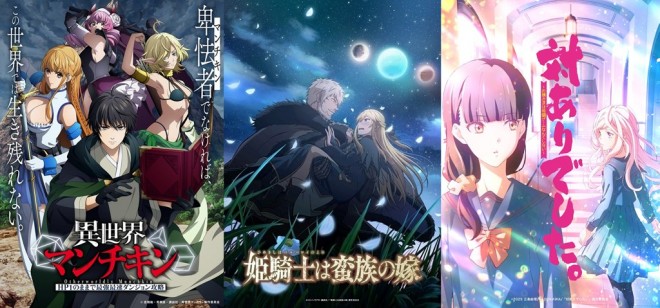
Six Anime Broadcast Delay
The delays were all explained as efforts toward “quality improvement” or “scheduling adjustments,” but insiders point to deeper structural issues, such as excessive workloads, lack of funding, and the long-standing problem of inadequate compensation for creators. Japan’s broader wage stagnation and inflation gap also contribute to the strain, as costs rise but production fees often fail to increase accordingly.
A Surge in Delays and a Rare Cancellation
In October 2025, multiple anime series scheduled for broadcast were suddenly postponed. At present, at least six series have confirmed delays, making this one of the most unusual seasons in recent memory. Even more alarming, one anime has been canceled entirely.
Official announcements usually cite reasons such as “improving quality” or “adjusting schedules.” Yet behind these explanations lies a more uncomfortable truth: structural issues in the production system and a chronic lack of funding. Japan’s anime creators have long been underpaid, and now the industry is colliding with Japan’s broader wage stagnation. Prices rise, but wages lag behind, and the burden often falls on workers instead of being reflected in production budgets.
Postponed Titles
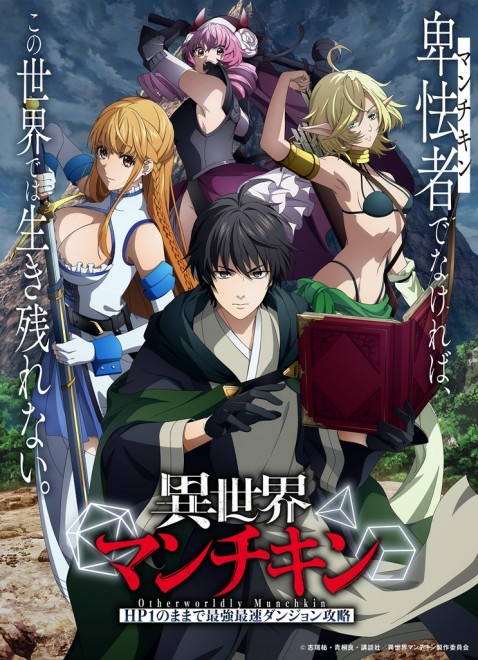
Otherworldly Munchkin: Let's Speedrun the Dungeon with Only 1 HP!
1. Otherworldly Munchkin: Let's Speedrun the Dungeon with Only 1 HP!
(JP: 異世界マンチキン ―HP1のままで最強最速ダンジョン攻略―)
Postponed from October 2025; new broadcast date undecided (announced September 16).
2. Young Ladies Don't Play Fighting Games
(JP: 対ありでした。~お嬢さまは格闘ゲームなんてしない~)
Postponed from 2025 to 2026 due to scheduling adjustments (announced September 22).
3. Witch Hat Atelier
(JP: とんがり帽子のアトリエ)
Shifted from 2025 to 2026 “to better showcase the work’s appeal” (announced September 6).
4. The Barbarian's Bride
(JP: 姫騎士は蛮族の嫁)
Rescheduled from October 2025 to April 2026 for quality improvement (announced September 3).
5. Komekami Girls
(JP: こめかみっ!ガールズ)
Indefinitely delayed after a full project review (announced in August).
6. Sentenced to Be a Hero
(JP: 勇者刑に処す)
Delayed to January 2026, reportedly due to programming adjustments (announced July).
On top of these, Sono Keisatsukan, Tokidoki Yaju! (その警察官、ときどき野獣!) had its production canceled outright on August 4, 2025. This marks a more serious development than simple postponement.
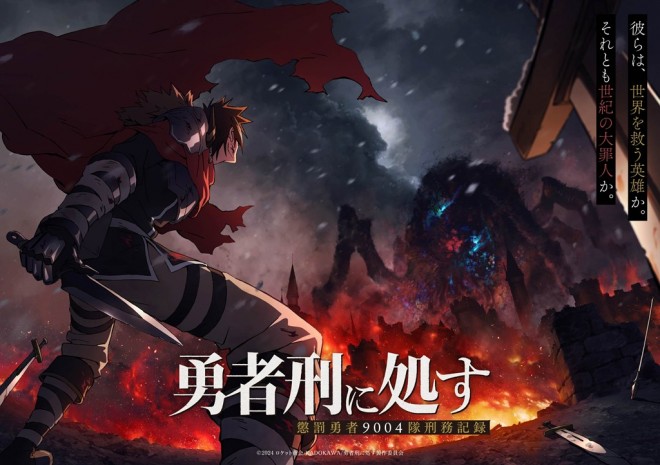
Sentenced to Be a Hero
Growth on Paper, Strain in Reality
Paradoxically, Japan’s anime production market appears to be thriving. In 2024, its total value reached a record 362.1 billion yen, boosted by streaming platforms. Projections suggest it could hit 400 billion yen in 2025. On the surface, it looks like a golden era.
But beneath the numbers, the cracks are widening. While top production companies and IP holders are reporting increased revenue, smaller subcontractors and specialist studios are struggling. Data shows that 33.9% of anime studios are operating in the red. Chronic staff shortages and relentless scheduling pressures have become the norm. Now those pressures are surfacing in the form of delays and cancellations at an unusually high frequency.
One reason is the multilayered subcontracting system. Anime studios often depend on a production committee model, which pools funds from multiple companies, but leaves little room for studios to earn independently.
[Source]
Teikoku Databank “Anime Production Market” Trend Survey 2025
https://www.tdb.co.jp/report/industry/20250813-anime24y/
New Experiments and Shifting Power
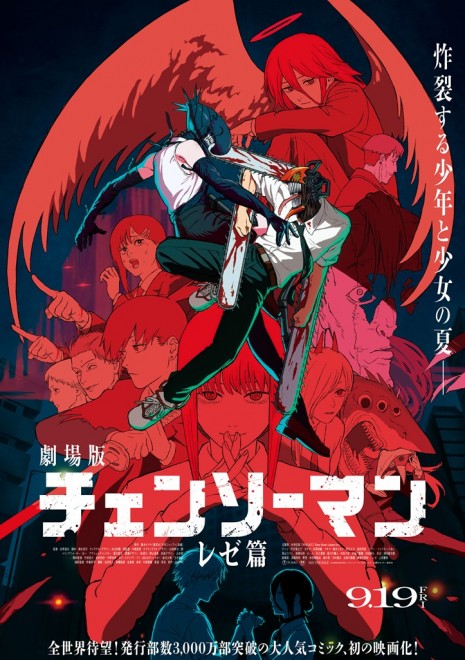
Chainsaw Man The Movie Reze Arc
Recently, all eyes have been on MAPPA’s Chainsaw Man. Unlike the committee system, MAPPA self-financed the production. While season one’s Blu-ray and DVD sales were surprisingly low, the new Reze Arc has seen strong box office success. If MAPPA’s gamble pays off, it could change how anime production and distribution are structured in the future.
Still, the current flood of postponements suggests deeper problems: rising production costs and the looming risk of declining quality.
What This Means for the Future of Anime
As Japanese studios face these struggles, foreign companies are stepping in. More overseas firms are acquiring or investing in anime studios. A striking case was ADK, an influential company holding partial rights to many major IPs, being acquired by Korean game publisher Krafton.
That said, the rights owned by ADK represent only a portion of the respective IPs, which means they may be difficult to leverage on their own. While I do not have a detailed understanding of the exact scope of ADK’s holdings, consider the case of Japan’s national icon Doraemon. If a company wanted to produce merchandise featuring Doraemon, it would still need to obtain permission from Shogakukan-Shueisha Productions Co., Ltd.
Japanese anime is now one of the world’s most watched and valued cultural exports. But the industry is at a crossroads, and its next steps could determine how much influence Japan retains in the global IP market.

Related News
[Editor's Picks] Predicting the Next Manga Award 2025
The 2025 Next Manga Award results will be announced on September 18 at 7:00 p.m. JST, exactly 24 hours afte...
![[Editor's Picks] Predicting the Next Manga Award 2025](/upimg/thumb/6000/6235/img280/next-manga-awards2025.jpg)
[Editor's Picks] Jujutsu Kaisen Modulo Runs for Six Months with 3 Volumes: Set 68 Years Later with Sci-Fi Elements
Jujutsu Kaisen Modulo, set 68 years later in 2086, follows Yuta Okkotsu’s descendants in a six-month spinof...
![[Editor's Picks] Jujutsu Kaisen Modulo Runs for Six Months with 3 Volumes: Set 68 Years Later with Sci-Fi Elements](/upimg/thumb/6000/6185/img280/jujutsu-kaisen-modulo.jpg)
[Editor's Picks] What Is an Anisong? A Look Back from the Past to the Present
Anisong (Anime Song) explained with personal insights and history from Astro Boy to YOASOBI, including tie ...
![[Editor's Picks] What Is an Anisong? A Look Back from the Past to the Present](/upimg/thumb/6000/6084/img280/anisong-1.jpg)
[Editor’s Picks] Why Gundam Became a Legendary Franchise: The Impact of G Gundam and Gundam Wing
Discover how G Gundam and Gundam Wing reshaped the Gundam franchise into a global phenomenon, attracting di...
![[Editor’s Picks] Why Gundam Became a Legendary Franchise: The Impact of G Gundam and Gundam Wing](/upimg/thumb/5000/5524/img280/Gundam-w-30th.jpg)
[Editor’s Picks] Do You Know CoroCoro Comic? A Manga Magazine Behind Japan’s IP Boom
Have you ever heard of CoroCoro Comic, one of Japan’s leading monthly manga magazines that has driven numer...
![[Editor’s Picks] Do You Know CoroCoro Comic? A Manga Magazine Behind Japan’s IP Boom](/upimg/thumb/5000/5520/img280/Fate-Rewinder-Manga-1.jpg)