Analysis: Why Did Japan Become the Kingdom of Characters?
It is hard to imagine anyone who has never heard of at least one of these names: Pokémon, Hello Kitty, or Godzilla. Even outside Japan, most people recognize at least one of them, while some may even be passionate fans of all three. Each of these properties is a globally recognized intellectual property created in Japan.
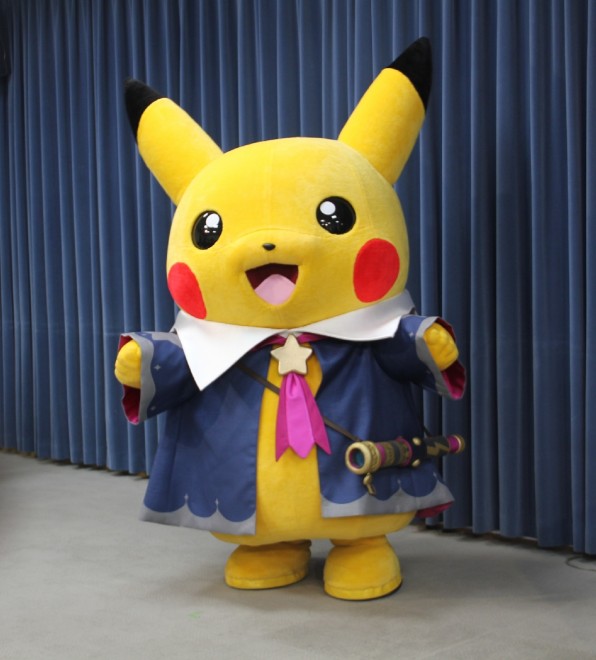
"Hoshizora Pikachu" Appears at the Pokémon Observatory Press Conference (C) ORICON NewS inc.
Around the world, countless characters exist, yet Japan could be considered the leading nation for intellectual property. For instance, a financial services company in the United States, TITLEMAX, released a ranking of cumulative IP revenues up to 2019. Pokémon held first place, Hello Kitty came second, Super Mario ranked eighth, and remarkably, ten of the top 25 IPs were Japanese.
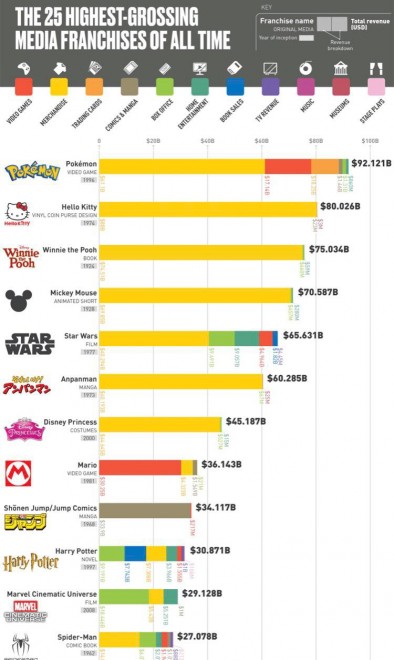
The 25 Highest-Grossing Media Franchises of All Time (KEIDANREN,2023)
Having spent most of my life in Japan, I had never questioned why the country continually produces such popular IP. However, as I have increasingly witnessed the global popularity of anime through my work, I became interested in exploring what lies behind this creativity. In this article, I will examine possible reasons why Japan’s character business has become so popular worldwide, drawing on hypotheses.
Japan Full of “Monsters”: A Connection to the Idea of Eight Million Gods
One personal hypothesis is that Japan’s polytheistic worldview plays an important role. As depicted in Hayao Miyazaki’s Spirited Away, Japan has long embraced the belief that spirits reside in rivers, forests, and even in radishes or chicks—an outlook known as the faith in “Yaoyorozu,” or “Eight Million Gods.” Although many modern Japanese identify as non-religious, they may unconsciously carry forward this perspective that everything possesses a soul.
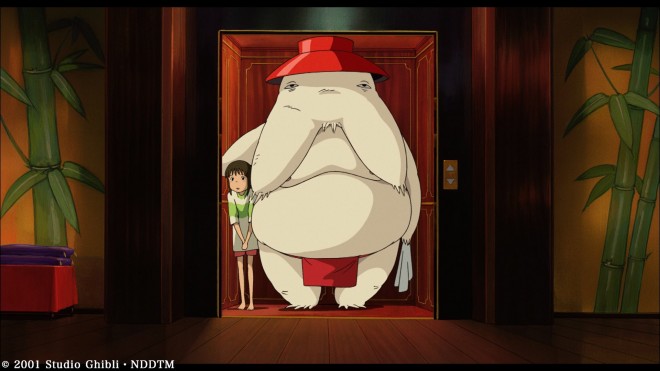
Radish Spirit, said to be modeled on a radish, from Spirited Away (C) 2001 Studio Ghibli・NDDTM
Because of this sense that spirits dwell in all things, creators may look at the ordinary world around them and imagine new characters. For example, when seeing mice or pigeons in town, a creator like Satoshi Tajiri could envision creatures such as Pikachu or Pidove. In Digimon, which unfolds in a digital setting, monsters inspired by plants and musical instruments also appear. There is even an entire series whose hero is literally a bread bun—Anpanman, a household name for Japanese children.
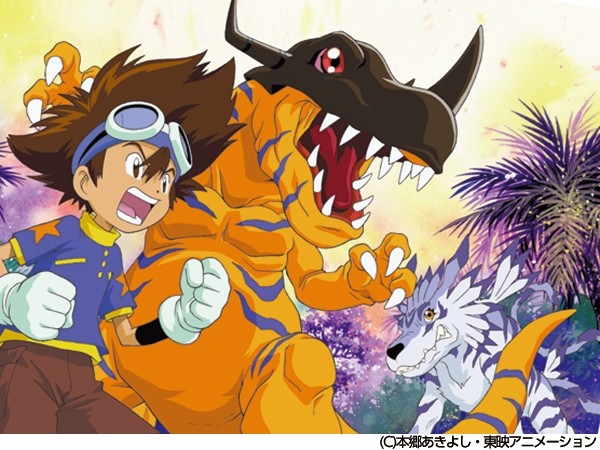
Visual from the 1999 broadcast of Digimon Adventure (C) Akiyoshi Hongo, Toei Animation
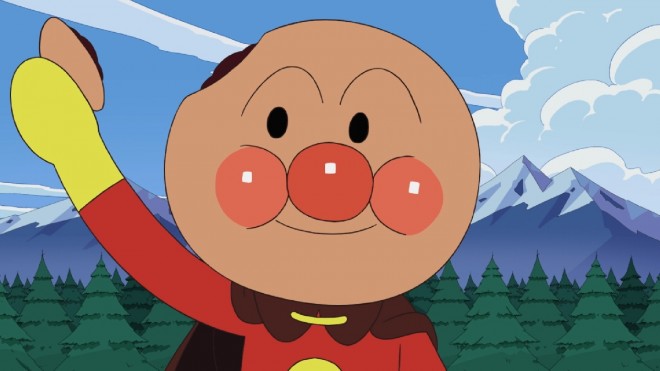
Scene from the film Soreike! Anpanman: Chapon no Hero! (C) Takashi Yanase/Froebel-kan, TMS, NTV (C) Takashi Yanase/Anpanman Production Committee 2025
Historical Roots of Personification in Japanese Art
This tendency is not limited to modern anime. About one thousand years ago, the Japanese national treasure Chojujinbutsugiga (literally “Animal-person Caricatures”) depicted rabbits and frogs frolicking together in humanlike ways. Similarly, artworks portraying Hundred Demons on a Night Stroll, which date back roughly five hundred years, showed abandoned houses, lanterns, and signboards transforming into demons and marching in procession.
These cultural and artistic traditions suggest a deep historical precedent for attributing spirit and character to animals, objects, and everyday life. It is highly possible that this spiritual and cultural background has influenced the creation of today’s characters, connecting works such as Spirited Away, Pokémon, and Hello Kitty to centuries-old patterns of Japanese imagination.
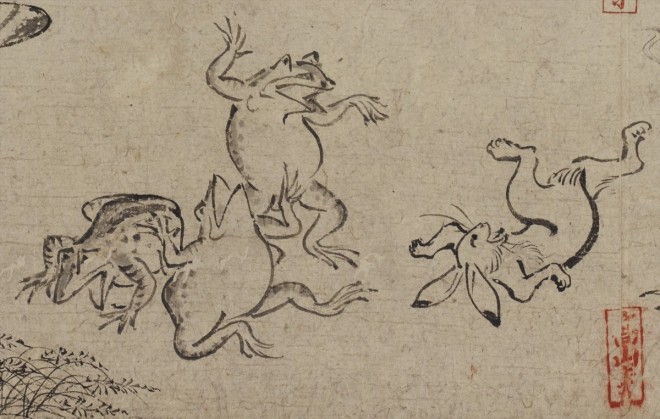
Chojujinbutsugiga
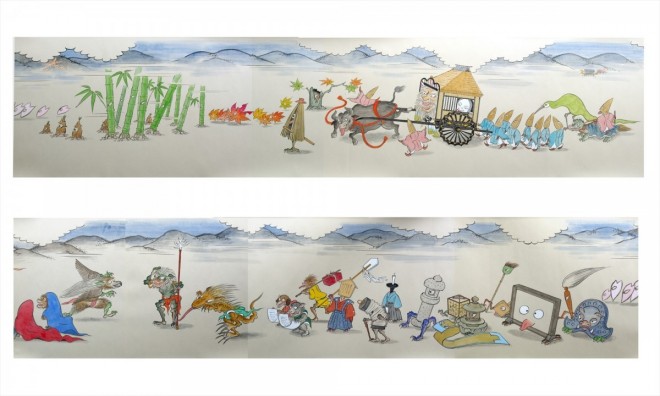
Hundred Demons on a Night Stroll

Related News
Captain Pikachu Makes Surprise Appearance at ME:I Concert in Yokohama with Special Collaboration Performance [Spoilers]
Captain Pikachu joined ME:I’s Yokohama arena tour stop for a surprise performance of “Ready GO” from Pokémo...
![Captain Pikachu Makes Surprise Appearance at ME:I Concert in Yokohama with Special Collaboration Performance [Spoilers]](/upimg/thumb/5000/5799/img280/ME-I -pikachu.jpg)
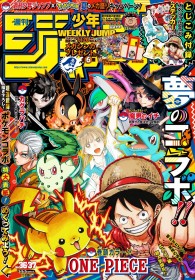
Jump Magazine and Pokémon Join Forces for the First Time—Special Fold-Out Cover Features ONEPIECE, Kagurabachi, and More
Weekly Shonen Jump and the globally beloved Pokémon franchise have teamed up for the first time ever, unvei...
[INTERVIEW] My Melody & Kuromi: Director Misato on Sanrio’s New Challenge
The Netflix series My Melody & Kuromi, featuring beloved Sanrio characters My Melody and Kuromi, begins str...
![[INTERVIEW] My Melody & Kuromi: Director Misato on Sanrio’s New Challenge](/upimg/thumb/5000/5464/img280/sanrio-my-melody-kuromi-netflix-2025-01.jpg)
LE SSERAFIM Talks Bonds with My Melody & Kuromi
LE SSERAFIM appeared in a new talk video surrounded by My Melody and Kuromi merchandise, discussing group b...

SPY×FAMILY × Sanrio Collaboration Brings Exclusive Pop-Up Shops in Japan
The hit anime SPY×FAMILY is teaming up with Sanrio for an exclusive collaboration featuring adorable new vi...

JUMP SHOP Osaka Tennoji Store Reopens Permanently on Aug 1
Shueisha’s officially licensed JUMP SHOP Osaka Tennoji Store will reopen as a permanent location on August ...
Shonen Jump+ Game “Jump+ Jumble Rush” to Launch in Fall 2025
Bandai Namco Entertainment announced on July 3 that Jump+ Jumble Rush, a new smartphone game based on the S...
DIGIMON BEATBREAK Reveals New Visuals for Tomoro Tenma, Reina Sakuya, Makoto Kuonji and Partners
The upcoming anime DIGIMON BEATBREAK, the tenth television series in the Digimon franchise, has released ne...
Kaiju No. 8 Rocks Anime Expo 2025 with Godzilla Collab and Live Voice Acting
From July 3 to 6, Anime Expo 2025 took place in Los Angeles, with Kaiju No. 8 drawing a massive crowd at it...
Historic Godzilla Returns in Projection Mapping at Tokyo Metropolitan Government Building: Phase 2 Starts November 30 (Nov. 202...
On November 3, 1954, Godzilla first appeared on movie screens, captivating audiences not just in Japan but ...