


[This Week in Japan] Manga Creator Hisashi Eguchi Faces Backlash Over Tracing Scandal
The Difference Between Tracing, Referencing, and Inspiration
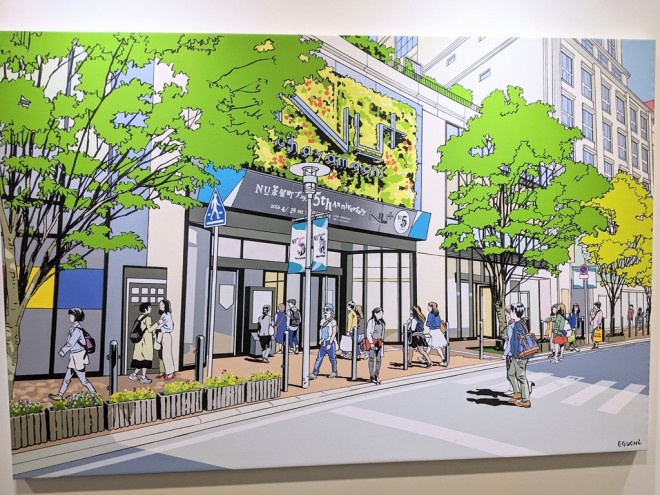
Photo taken by the Editor at the Hisashi Eguchi exhibition.
When discussing this controversy, a key question arises: Where is the line between “referencing” and “tracing”? In Japan’s art and illustration industry, these terms are generally distinguished as follows:
■Tracing
The act of directly drawing over someone else’s image as an underlay. When shapes or compositions match, it can constitute copyright infringement.
■Copying
Drawing something while looking at the original to imitate it. This is acceptable for practice, but commercial use or public display without permission may cause issues.
■Reference or Motif
Using a pose or atmosphere as inspiration while significantly altering the composition, character, clothing, or background. When enough originality is added, it is typically considered acceptable.
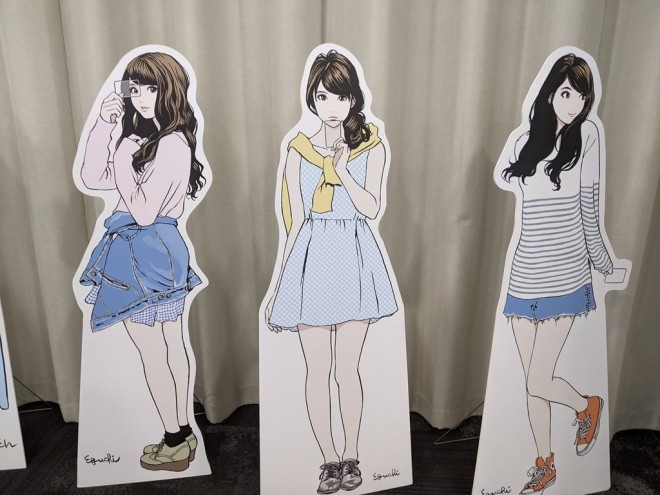
Photo taken by the Editor at the Hisashi Eguchi exhibition.
The extent of alteration determines the boundary between legality and ethics. For example, JoJo’s Bizarre Adventure creator Hirohiko Araki often references fashion magazines and sculptures for poses, but since he substantially transforms the figures, outfits, and settings, his work is not considered problematic. In contrast, Eguchi’s drawings, which closely traced photo outlines, may lack sufficient creativity and could be seen as “reproduction or adaptation.”
Whether this interpretation is definitive remains unclear to non-experts. Since copyright and portrait rights violations in Japan are offenses prosecuted only upon complaint, many cases simply remain unchallenged. There also seems to be a cultural attitude that venerates artists like Inoue or Araki as near-divine figures, leading people to think, “It’s fine because it’s them,” or “That was a long time ago.” I admit I share that sentiment.
In Eguchi’s case, what likely intensified the backlash was that the traced image was not used as part of a manga panel or illustration element it was sold as an independent artwork. Furthermore, after being called out by Kyu Kanai, Eguchi’s follow-up post was perceived as condescending, which may have aggravated public resentment even more.

Related News
[Voice Actor] Marika Kono Reflects on 7 Years with Uma Musume and the Journey of Silence Suzuka
Voice actress Marika Kono updated her X account on the 3rd, sharing a photo of herself as Uma Musume taken ...
![[Voice Actor] Marika Kono Reflects on 7 Years with Uma Musume and the Journey of Silence Suzuka](/upimg/thumb/1000/1647/img280/cf8db159aa8505b506355e7b2cc6bac8.jpg)
Ayana Taketatsu Amazed by Aura’s Popularity in Frieren: Beyond Journey’s End — Praised for the “Die by Your Own Hand” Scene: “T...
Ayana Taketatsu reflects on Aura’s enduring popularity at the Frieren: Beyond Journey’s End 2nd Anniversary...

[Editor’s Picks] Too Many Anime? Broadcast Delays Become an "Unusual Situation" as Six TV Series Are Postponed and One Canceled
As the summer anime season concludes and new titles from the fall season begin airing, the industry faces a...
![[Editor’s Picks] Too Many Anime? Broadcast Delays Become an "Unusual Situation" as Six TV Series Are Postponed and One Canceled](/upimg/thumb/6000/6362/img280/Fall-Anime-Broadcast-Delays.jpg)
[Editor's Picks] Predicting the Next Manga Award 2025
The 2025 Next Manga Award results will be announced on September 18 at 7:00 p.m. JST, exactly 24 hours afte...
![[Editor's Picks] Predicting the Next Manga Award 2025](/upimg/thumb/6000/6235/img280/next-manga-awards2025.jpg)
[Editor's Picks] Jujutsu Kaisen Modulo Runs for Six Months with 3 Volumes: Set 68 Years Later with Sci-Fi Elements
Jujutsu Kaisen Modulo, set 68 years later in 2086, follows Yuta Okkotsu’s descendants in a six-month spinof...
![[Editor's Picks] Jujutsu Kaisen Modulo Runs for Six Months with 3 Volumes: Set 68 Years Later with Sci-Fi Elements](/upimg/thumb/6000/6185/img280/jujutsu-kaisen-modulo.jpg)
[Editor's Picks] What Is an Anisong? A Look Back from the Past to the Present
Anisong (Anime Song) explained with personal insights and history from Astro Boy to YOASOBI, including tie ...
![[Editor's Picks] What Is an Anisong? A Look Back from the Past to the Present](/upimg/thumb/6000/6084/img280/anisong-1.jpg)
[English Translation] KADOKAWA Announces Groundbreaking Policy Allowing YouTube Use of Anime Clips and Commentary
KADOKAWA allows legal use of anime clips and commentary on YouTube for four new titles from July 2025, incl...
![[English Translation] KADOKAWA Announces Groundbreaking Policy Allowing YouTube Use of Anime Clips and Commentary](/upimg/thumb/5000/5546/img280/KADOKAWA-YouTube-Clips-Guidelines-1.jpg)
[Editor’s Picks] Why Gundam Became a Legendary Franchise: The Impact of G Gundam and Gundam Wing
Discover how G Gundam and Gundam Wing reshaped the Gundam franchise into a global phenomenon, attracting di...
![[Editor’s Picks] Why Gundam Became a Legendary Franchise: The Impact of G Gundam and Gundam Wing](/upimg/thumb/5000/5524/img280/Gundam-w-30th.jpg)