


[This Week in Japan] Manga Creator Hisashi Eguchi Faces Backlash Over Tracing Scandal
Japan’s Cultural Context and Copyright in Everyday Life
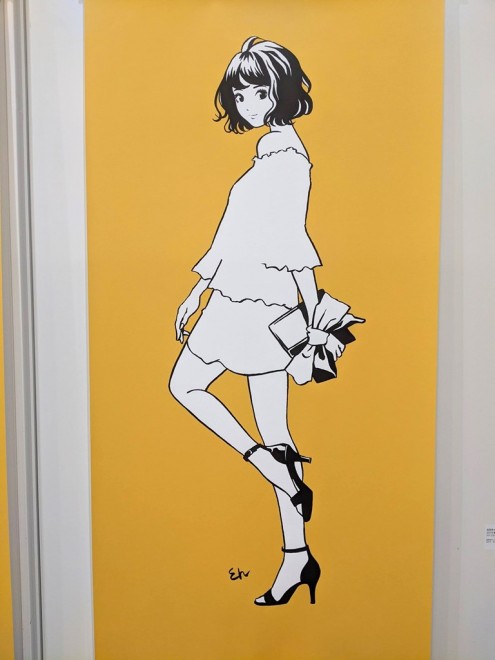
Photo taken by the Editor at the Hisashi Eguchi exhibition.
In countries like the United States, fair use allows limited citation or reproduction of works for purposes such as criticism, education, or parody. However, unauthorized tracing for commercial use is prohibited everywhere.
Japan, on the other hand, has long existed within a cultural “gray zone” regarding copyright. Though somewhat different from the tracing issue, debates over copyright in doujinshi (fan-made comics) and fan art are common. Technically, most secondary creations (such as those sold at events like Comic Market )violate copyright law. Yet, many rights holders tolerate them because of a shared understanding that “fan activity helps sustain a work’s popularity.” In fact, many well-known professional creators once participated in such fan culture themselves, fostering the sentiment that “secondary creation isn’t inherently bad.” In recent years, some companies have even published official fan work guidelines, essentially saying, “As long as you follow the rules, it’s fine.”
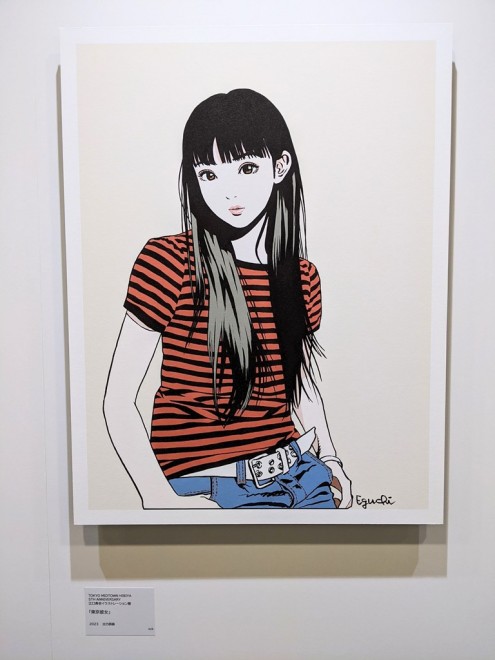
Photo taken by the Editor at the Hisashi Eguchi exhibition.
Against this backdrop, some Japanese creators may still regard tracing as an extension of artistic reference. When Eguchi began his career in the 1970s and 1980s (an era before the internet or social media) the casual “borrowing” of photos rarely led to controversy. His outdated sense of creative norms may partly explain the backlash he now faces.
At the same time, it is not something that can be dismissed as a mere “product of its time.” The Eguchi incident highlights not only the legal dimensions of copyright and portrait rights but also how much public perception and social ethics matter in today’s world. Ultimately, it serves as a reminder that in modern society, creative freedom must coexist with respect for others’ rights and sensitivities.

Related News
[Voice Actor] Marika Kono Reflects on 7 Years with Uma Musume and the Journey of Silence Suzuka
Voice actress Marika Kono updated her X account on the 3rd, sharing a photo of herself as Uma Musume taken ...
![[Voice Actor] Marika Kono Reflects on 7 Years with Uma Musume and the Journey of Silence Suzuka](/upimg/thumb/1000/1647/img280/cf8db159aa8505b506355e7b2cc6bac8.jpg)
Ayana Taketatsu Amazed by Aura’s Popularity in Frieren: Beyond Journey’s End — Praised for the “Die by Your Own Hand” Scene: “T...
Ayana Taketatsu reflects on Aura’s enduring popularity at the Frieren: Beyond Journey’s End 2nd Anniversary...

[Editor’s Picks] Too Many Anime? Broadcast Delays Become an "Unusual Situation" as Six TV Series Are Postponed and One Canceled
As the summer anime season concludes and new titles from the fall season begin airing, the industry faces a...
![[Editor’s Picks] Too Many Anime? Broadcast Delays Become an "Unusual Situation" as Six TV Series Are Postponed and One Canceled](/upimg/thumb/6000/6362/img280/Fall-Anime-Broadcast-Delays.jpg)
[Editor's Picks] Predicting the Next Manga Award 2025
The 2025 Next Manga Award results will be announced on September 18 at 7:00 p.m. JST, exactly 24 hours afte...
![[Editor's Picks] Predicting the Next Manga Award 2025](/upimg/thumb/6000/6235/img280/next-manga-awards2025.jpg)
[Editor's Picks] Jujutsu Kaisen Modulo Runs for Six Months with 3 Volumes: Set 68 Years Later with Sci-Fi Elements
Jujutsu Kaisen Modulo, set 68 years later in 2086, follows Yuta Okkotsu’s descendants in a six-month spinof...
![[Editor's Picks] Jujutsu Kaisen Modulo Runs for Six Months with 3 Volumes: Set 68 Years Later with Sci-Fi Elements](/upimg/thumb/6000/6185/img280/jujutsu-kaisen-modulo.jpg)
[Editor's Picks] What Is an Anisong? A Look Back from the Past to the Present
Anisong (Anime Song) explained with personal insights and history from Astro Boy to YOASOBI, including tie ...
![[Editor's Picks] What Is an Anisong? A Look Back from the Past to the Present](/upimg/thumb/6000/6084/img280/anisong-1.jpg)
[English Translation] KADOKAWA Announces Groundbreaking Policy Allowing YouTube Use of Anime Clips and Commentary
KADOKAWA allows legal use of anime clips and commentary on YouTube for four new titles from July 2025, incl...
![[English Translation] KADOKAWA Announces Groundbreaking Policy Allowing YouTube Use of Anime Clips and Commentary](/upimg/thumb/5000/5546/img280/KADOKAWA-YouTube-Clips-Guidelines-1.jpg)
[Editor’s Picks] Why Gundam Became a Legendary Franchise: The Impact of G Gundam and Gundam Wing
Discover how G Gundam and Gundam Wing reshaped the Gundam franchise into a global phenomenon, attracting di...
![[Editor’s Picks] Why Gundam Became a Legendary Franchise: The Impact of G Gundam and Gundam Wing](/upimg/thumb/5000/5524/img280/Gundam-w-30th.jpg)