


[Editor's Picks] What Is an Anisong? A Look Back from the Past to the Present
The 1980s: Increasing Use of Kayokyoku and J-pop Songs
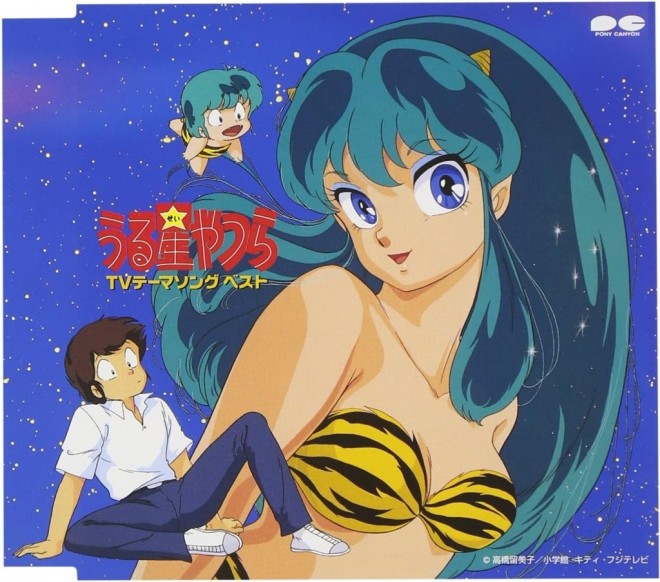
Urusei Yatsura (by Rumiko Takahashi)
From the 1980s into the 1990s, anisongs hit a turning point and began to fuse with J pop. A milestone was the Galaxy Express 999 movie. Godiego’s Galaxy Express 999 from 1979 reached No. 2 on the Oricon Singles Chart and sold about 666,000 copies, a record for an anime theme at the time.
In Rumiko Takahashi's Urusei Yatsura, Yuko Matsutani's Lum no Love Song (1981) expressed the heroine Lum's feelings in a technopop style and spread widely through Japan. This song was made before my generation, but it always appears when Japanese TV or magazines review old anime. It's a well-known track among Japanese people, and I would consider it a classic example of anisong.
Around this time, artists who weren't primarily known for singing anisongs started creating anime themes. Sometimes it was a clear tie-up designed for promotion, and sometimes it was a direct commission from the production side. This mix made it harder to categorize.
(Since the official video of the original song was hard to find, I will post the cover version of Sumire Uesaka.)
For example, in Miyuki, based on Mitsuru Adachi's manga, the opening theme was H2O's Omoide ga Ippai (1983). It was one of the first anime tie-ins, and it reached No. 6 on the Oricon charts. Looking back, H2O's case seems like a early example of the kind of anime tie-up deals that are now common. This makes it an early example of what I previously categorized as "2. Tie-up songs written specifically for the anime."
Here's the background. Kitty Film, the parent company of Kitty Records, had the broadcast rights for Miyuki. At the time, H2O was struggling in the marketplace. They could write songs on their own, but to try to become successful again, they worked with professional songwriters. The song was produced in a way that would be popular with anime fans. The lyrics, including the well-known line "You are still Cinderella as you climb the stairs of adulthood," express the feelings of a boy watching a girl grow up. This is similar to the setting of Miyuki, which is about childhood friends falling in love. However, the song doesn't refer to the story's details directly. Instead, by talking about the universal experience of growing up, the song became a part of Japanese pop culture that people still love today.
The Complex Reception of Anisongs in the 1980s
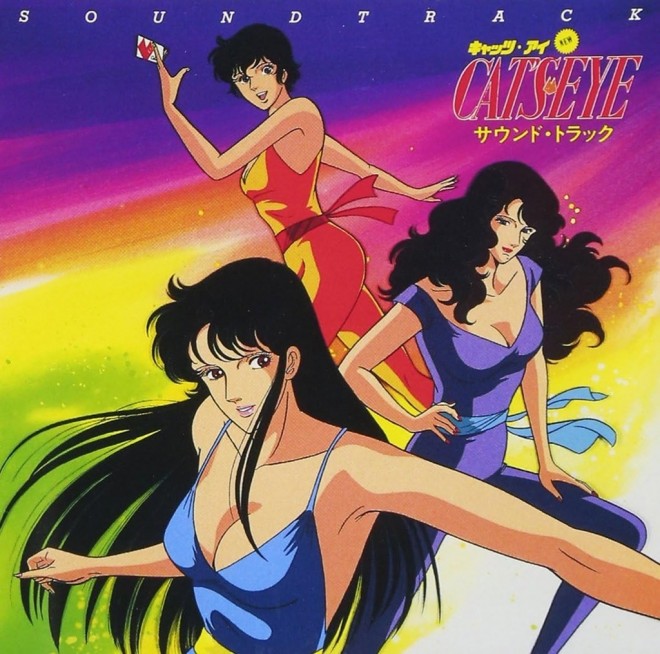
CAT’S EYE (by Tsukasa Hojo)
The 1980s were a time of great change for anisongs. More and more famous artists started using anime themes. An example is Anri, a singer-songwriter who was already producing hit songs in Japan, performing CAT'S EYE (1983).
But the situation was complicated. CAT'S EYE was a huge success, but the artist, anime fans, and the general public had different feelings about it. Anri later admitted that when she was asked to sing the theme song for the anime program Cat's Eye, she hesitated. She felt that her own musical style at the time was very different from the role of singing the theme song for an anime program. (Nippon Broadcasting News ONLINE)
Some anime fans felt the show was being used as little more than a marketing tool.
To put it in context: while Godiego's Galaxy Express 999 had been a hit, big-name singers typically only took on themes for movies or other large-scale projects. CAT'S EYE was different because it was a weekly TV anime. On the other hand, H2O, who sang "Omoide ga Ippai" for Miyuki, weren't very famous yet, so anime fans didn't strongly associate the song with the performers. With Anri, her fame made the collaboration more visible and controversial.
Despite this tension, the general public was captivated by CAT'S EYE. It sold over 800,000 copies and became a huge hit. At that point, things changed. Anri herself could sing it with confidence, and new listeners who were drawn in by the song started watching the anime. The series CAT'S EYE became a legendary anime, partly because of its popular theme song.
(And by the way, CAT'S EYE will be fully remade and streamed on Disney Plus starting in September 2025, with Ado performing the new theme song CAT'S EYE. I, for one, cannot wait!)
This period also gave us another example from Mitsuru Adachi's manga adaptations: Touch. Its theme song, Yoshimi Iwasaki's Touch (1985), became a very common and well-liked type of anime song and a long-lasting hit. It is still considered a classic example of an anisong.
[Source] Nippon Broadcasting News ONLINE

Related News
[Anison Event] Animelo Summer Live 2024: 3-Day Event Recap and Exclusive Photos Featuring B-Komachi, Bravern, and Miku Ito × Tr...
The world's largest anime song live event, Animelo Summer Live 2024 -Stargazer- (AniSama), now in its 19th ...
![[Anison Event] Animelo Summer Live 2024: 3-Day Event Recap and Exclusive Photos Featuring B-Komachi, Bravern, and Miku Ito × TrySail](/upimg/thumb/1000/1633/img280/63a20164f5e5e2c32206bc8129264411.jpg)
[Anison Event] "Animelo Summer" Opens with Kis-My-Ft2's Toshiya Miyata and UniteUp! Performing 'Yuuki 100%' to Audience Delight
The first day of the world’s largest anime song live event, Animelo Summer Live 2024 -Stargazer- (commonly ...
![[Anison Event] "Animelo Summer" Opens with Kis-My-Ft2's Toshiya Miyata and UniteUp! Performing 'Yuuki 100%' to Audience Delight](/upimg/thumb/1000/1585/img280/2ec2534aa5fefb62f5c425740d531986.jpg)
[Anison Event] MBS Anime Fes Participating Works Announced: Jujutsu Kaisen, Witch from Mercury, Tokyo Revengers, WIND BREAKER
The lineup for the large-scale anime event MBS Anime Fes 2025 has been partially revealed. The event will t...
![[Anison Event] MBS Anime Fes Participating Works Announced: Jujutsu Kaisen, Witch from Mercury, Tokyo Revengers, WIND BREAKER](/upimg/thumb/1000/1516/img280/860b811acb647f9792aba836abe75579.jpg)
Aina the End Stages Surprise Live in Shinjuku: Dandadan Theme Song Performance Thrills 3,000 Fans, Aftermovie Released
Aina the End delivered a surprise guerilla live concert in Shinjuku, Tokyo, captivating an audience of arou...
Maximum the Hormone’s Insert Song Confirmed for Chainsaw Man: Reze Arc
Chainsaw Man: Reze Arc film debuts September 19 with Maximum the Hormone’s insert song and exclusive bookle...

GARNiDELiA Announces Indefinite Hiatus, Cancels All Remaining 2025 Tour Dates [Full Comment]
Japanese music unit GARNiDELiA has officially entered an indefinite hiatus as of September 2, 2025, accordi...
![GARNiDELiA Announces Indefinite Hiatus, Cancels All Remaining 2025 Tour Dates [Full Comment]](/upimg/thumb/6000/6015/img280/garnidelia-hiatus-2025-02.jpg)