


[Editor's Picks] What Is an Anisong? A Look Back from the Past to the Present
TM NETWORK Enters Anisongs: City Hunter and Gundam
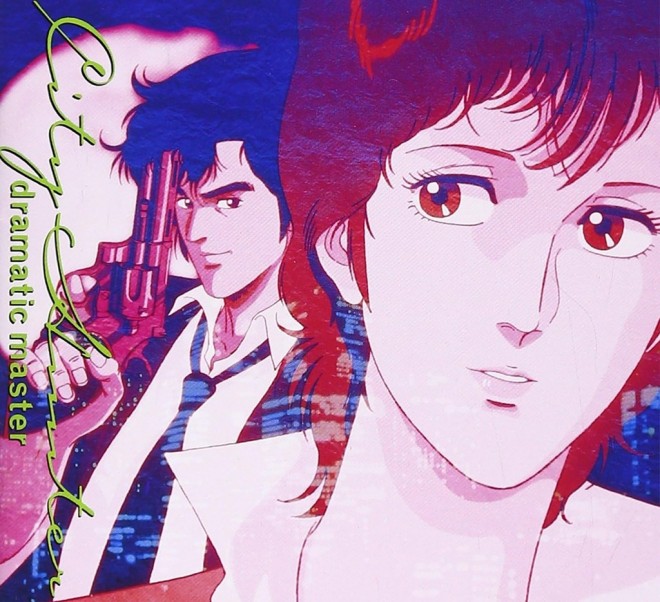
City Hunter (by Tsukasa Hojo)
By the late 1980s, TM NETWORK, the band that included Tetsuya Komuro—who would later influence a whole era of Japanese music known as the "TK sound"—became involved in anisong. They are best known for their 1987 song "Get Wild." It was used as the ending theme for City Hunter and became a huge hit. (City Hunter was also one of the first anime series to use a popular technique where the ending credits start before the song ends, which is still used in many anime today.)
Komuro later revealed that Sunrise specifically requested that the song begin with a quiet introduction so that it could seamlessly overlap with the anime's final scene.
The request was not just for a song. It was for a theme that would support the anime's direction. The lyrics reflect the mood of the series, but without using any specific names. Instead, they capture the emotions of young people living in cities. It is a song that "walked alongside" the anime, yet as music, it stands on its own as a stylish piece of city pop. (By the way, City Hunter's soundtrack is full of incredible city pop tracks, especially those on CITY HUNTER dramatic master. Every song feels almost perfect. I strongly recommend listening to it!)
Similarly, TM NETWORK's "BEYOND THE TIME" was created after the Gundam side directly requested it. Komuro reportedly spent over an hour talking with director Yoshiyuki Tomino about "what Gundam is" before even starting to write the script. Tomino even provided storyboards and lyrics. Komuro used these materials to expand his imagination and compose the song (Newtype, March 1988 issue, Kadokawa Shoten). The finished lyrics included phrases like "harukana sora" ("the distant universe"). In this phrase, "sora" was written as "sky" but was read as "universe." This is a play on words that is characteristic of Gundam's worldview. The lyrics fit well with the themes of the series, but the names of the characters, like "Amuro" or "Char," are never used. This made the song popular with both Gundam fans and other people. In fact, at the 1988 Japan Record Awards, it won the Gold Prize. This shows that anime film songs are highly valued within the music industry itself.
Decades later, in 2025, this very song suddenly played as an insert in episode 11 of Mobile Suit Gundam GQuuuuuuX. Many of us older fans immediately remembered it from thirty years ago. This is how closely the song and the work are connected. It's clear that the track has become a real anisong.
Around the same time, another notable example was Hideaki Tokunaga's "Yume wo Shinjite" (1990), which was used as the ending theme for the Dragon Quest anime. The song's lyrics and melody fit perfectly with the anime's worldview. It became one of Tokunaga's most famous songs. However, Tokunaga himself strongly believed that "anime is for children," so he avoided performing it live. He only started performing it on television after 2010, which showed how his perspective had changed over time.
[Source]
excite 2017.05.22
excite 2017.09.25

Related News
[Anison Event] Animelo Summer Live 2024: 3-Day Event Recap and Exclusive Photos Featuring B-Komachi, Bravern, and Miku Ito × Tr...
The world's largest anime song live event, Animelo Summer Live 2024 -Stargazer- (AniSama), now in its 19th ...
![[Anison Event] Animelo Summer Live 2024: 3-Day Event Recap and Exclusive Photos Featuring B-Komachi, Bravern, and Miku Ito × TrySail](/upimg/thumb/1000/1633/img280/63a20164f5e5e2c32206bc8129264411.jpg)
[Anison Event] "Animelo Summer" Opens with Kis-My-Ft2's Toshiya Miyata and UniteUp! Performing 'Yuuki 100%' to Audience Delight
The first day of the world’s largest anime song live event, Animelo Summer Live 2024 -Stargazer- (commonly ...
![[Anison Event] "Animelo Summer" Opens with Kis-My-Ft2's Toshiya Miyata and UniteUp! Performing 'Yuuki 100%' to Audience Delight](/upimg/thumb/1000/1585/img280/2ec2534aa5fefb62f5c425740d531986.jpg)
[Anison Event] MBS Anime Fes Participating Works Announced: Jujutsu Kaisen, Witch from Mercury, Tokyo Revengers, WIND BREAKER
The lineup for the large-scale anime event MBS Anime Fes 2025 has been partially revealed. The event will t...
![[Anison Event] MBS Anime Fes Participating Works Announced: Jujutsu Kaisen, Witch from Mercury, Tokyo Revengers, WIND BREAKER](/upimg/thumb/1000/1516/img280/860b811acb647f9792aba836abe75579.jpg)
Aina the End Stages Surprise Live in Shinjuku: Dandadan Theme Song Performance Thrills 3,000 Fans, Aftermovie Released
Aina the End delivered a surprise guerilla live concert in Shinjuku, Tokyo, captivating an audience of arou...
Maximum the Hormone’s Insert Song Confirmed for Chainsaw Man: Reze Arc
Chainsaw Man: Reze Arc film debuts September 19 with Maximum the Hormone’s insert song and exclusive bookle...

GARNiDELiA Announces Indefinite Hiatus, Cancels All Remaining 2025 Tour Dates [Full Comment]
Japanese music unit GARNiDELiA has officially entered an indefinite hiatus as of September 2, 2025, accordi...
![GARNiDELiA Announces Indefinite Hiatus, Cancels All Remaining 2025 Tour Dates [Full Comment]](/upimg/thumb/6000/6015/img280/garnidelia-hiatus-2025-02.jpg)