


[Editor's Picks] What Is an Anisong? A Look Back from the Past to the Present
YOASOBI, Creepy Nuts, and the streaming era
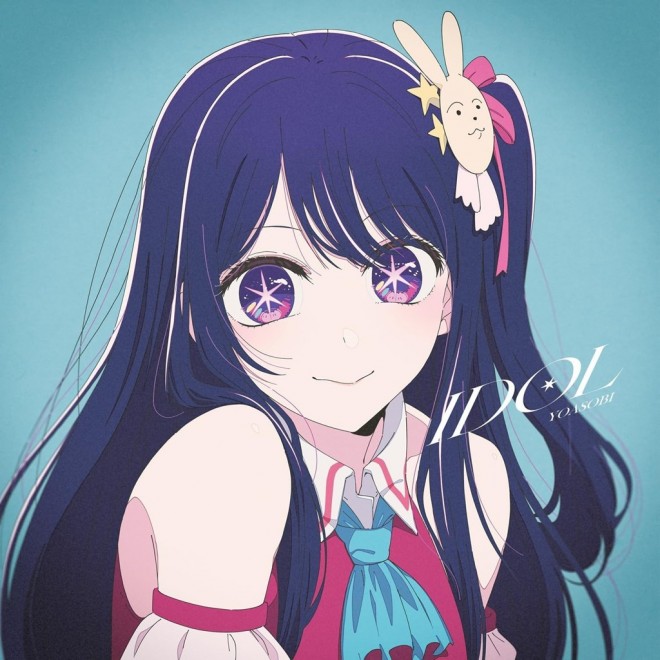
Oshi no Ko
As the 2010s arrived, anisongs became much better. YOASOBI's "Idol" (Oshi no Ko) and Creepy Nuts' "Bling-Bang-Bang-Born" (Mashle: Magic and Muscles) were both created with a deep understanding of the original works, and they dominated music charts both in Japan and abroad. LiSA's "Gurenge" (Demon Slayer) was also written after she read the manga carefully and understood the characters' emotions and the main themes. Then, she wrote the lyrics. I'm always surprised by how talented the singers are.
YOASOBI's "Idol" is a very experimental piece of music. It sounds like a Japanese idol group song, with the singer, Ikura, deliberately making her voice sound more childlike and cute, which makes her seem like an idol. The song uses a lot of orchestral hits, sudden tempo changes, deliberate distortions, and even a rap section. If you know Oshi no Ko, the song feels so perfectly in sync with the story that it could only have been created for this series.
The song "Cry Baby" by the band Official Hige Dandism was written for the anime series Tokyo Revengers. The lyrics are full of words like "resist the bad end" and "revenge," showing the mindset of a character stuck in a time loop. The song's many key changes create a feeling of moving forward and instability, drawing listeners into the world of the anime.
What amazes me is how these songs work on two levels. You don't need to have seen the anime to enjoy the music. But if you're familiar with the series, they'll resonate with you even more, making your experience even better. Anisongs are now popular with a wider audience. Anime and the music related to it are becoming popular with people of all ages and from all countries.
In closing
I wrote a lot. Editors should probably rein me in, but this is the blessing and the curse of web media without hard limits.
My answer to what an anisong is has not changed. If a song is used in anime, it is an anisong.
From the 1990s into the 2000s, songs slotted into openings and endings as if the slots were ad inventory. Decades later, those tracks are welded to the shows in our minds. Because when I hear Sobakasu, Kenshin Himura’s face pops up. It just does.
Today, landing an anime theme is something many artists want. It can be a real fight. Songs made with respect for the work and with real understanding of the original are increasingly judged as part of the work rather than just a theme placed on top. That is possible because pioneers like Ichiro Mizuki and NoB opened the path and kept walking it.
Let us keep enjoying anisongs.

Related News
[Anison Event] Animelo Summer Live 2024: 3-Day Event Recap and Exclusive Photos Featuring B-Komachi, Bravern, and Miku Ito × Tr...
The world's largest anime song live event, Animelo Summer Live 2024 -Stargazer- (AniSama), now in its 19th ...
![[Anison Event] Animelo Summer Live 2024: 3-Day Event Recap and Exclusive Photos Featuring B-Komachi, Bravern, and Miku Ito × TrySail](/upimg/thumb/1000/1633/img280/63a20164f5e5e2c32206bc8129264411.jpg)
[Anison Event] "Animelo Summer" Opens with Kis-My-Ft2's Toshiya Miyata and UniteUp! Performing 'Yuuki 100%' to Audience Delight
The first day of the world’s largest anime song live event, Animelo Summer Live 2024 -Stargazer- (commonly ...
![[Anison Event] "Animelo Summer" Opens with Kis-My-Ft2's Toshiya Miyata and UniteUp! Performing 'Yuuki 100%' to Audience Delight](/upimg/thumb/1000/1585/img280/2ec2534aa5fefb62f5c425740d531986.jpg)
[Anison Event] MBS Anime Fes Participating Works Announced: Jujutsu Kaisen, Witch from Mercury, Tokyo Revengers, WIND BREAKER
The lineup for the large-scale anime event MBS Anime Fes 2025 has been partially revealed. The event will t...
![[Anison Event] MBS Anime Fes Participating Works Announced: Jujutsu Kaisen, Witch from Mercury, Tokyo Revengers, WIND BREAKER](/upimg/thumb/1000/1516/img280/860b811acb647f9792aba836abe75579.jpg)
Aina the End Stages Surprise Live in Shinjuku: Dandadan Theme Song Performance Thrills 3,000 Fans, Aftermovie Released
Aina the End delivered a surprise guerilla live concert in Shinjuku, Tokyo, captivating an audience of arou...

Maximum the Hormone’s Insert Song Confirmed for Chainsaw Man: Reze Arc
Chainsaw Man: Reze Arc film debuts September 19 with Maximum the Hormone’s insert song and exclusive bookle...

GARNiDELiA Announces Indefinite Hiatus, Cancels All Remaining 2025 Tour Dates [Full Comment]
Japanese music unit GARNiDELiA has officially entered an indefinite hiatus as of September 2, 2025, accordi...
![GARNiDELiA Announces Indefinite Hiatus, Cancels All Remaining 2025 Tour Dates [Full Comment]](/upimg/thumb/6000/6015/img280/garnidelia-hiatus-2025-02.jpg)