


[Editor's Picks] What Is an Anisong? A Look Back from the Past to the Present
The Tie-Up Boom: Are These Truly Anisongs?
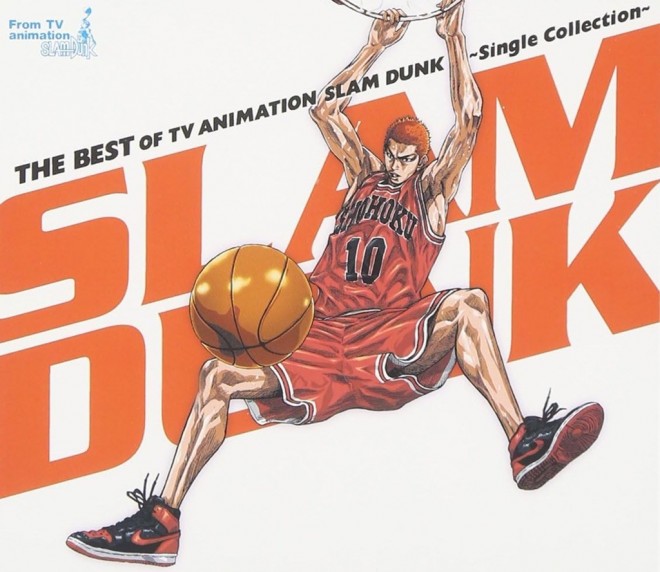
Slam Dunk (by Takehiko Inoue)
In the 1990s, songs like "Moonlight Densetsu" (1992) from Sailor Moon and "Yuzurenai Negai" (1994) from Magic Knight Rayearth sparked major movements. Both songs are good examples of anisongs from that era, but their backstories are more complicated than they might seem.
Moonlight Densetsu was used as the opening for Sailor Moon for many years. Since it was heard so often, many people thought it was an original piece written solely for the anime. The melody was actually from KEY WEST CLUB's song "Yume wa Majolica Senorita." New lyrics were written to go with Sailor Moon, and the result was a huge hit.
Yuzurenai Negai sold an amazing 1.2 million CDs and is known as a popular anisong. But if you look closely, you'll see that it doesn't really talk about the anime itself. At the same time, few people would say that Rayearth was just a way to make money.
(Perhaps due to rights issues, the original song and animation video from that time don't seem to be available, but I tried looking for covers and live footage.)
At about the same time, there was another big change: companies started working together a lot more. The most well-known example is Slam Dunk (1993–1996).
Slam Dunk might have been the first anime that was planned as a tie-up platform. The show worked closely with artists from the Being music agency, creating a real "partnership model." During the show, there were six different opening and ending themes. They were sung by BAAD, ZYYG, WANDS, MANISH, ZARD, and Maki Ohguro. Each TV season brought new songs, making sure there was always something new to listen to.
Several of these songs became very popular. WANDS' Sekai ga Owaru Made wa... and ZARD's My Friend both reached No. 1 on the Oricon Weekly Chart. Maki Ohguro's Anata Dake Mitsumeteru sold over one million copies.
So here is the problem. Are these anisongs?
The successes of the 1980s had already shown record labels that putting songs into anime could generate hits. By the 1990s, record companies began pouring more effort into anime tie-ups. But for some pure anime fans, this trend was not necessarily a welcome one. In terms of my earlier categories, this would fall under “4. Existing songs later provided as tie-ups.”
In practice, three different types of songs now coexisted in the charts:
・the “classic anisong” style that put the anime title or characters front and center
・the commissioned write-ups that avoided proper nouns and strove for universality
・J-pop tracks positioned with anime as part of a broader promotional strategy
Together, these created a new era in which anisongs had entered true mainstream popularity.

Related News
[Anison Event] Animelo Summer Live 2024: 3-Day Event Recap and Exclusive Photos Featuring B-Komachi, Bravern, and Miku Ito × Tr...
The world's largest anime song live event, Animelo Summer Live 2024 -Stargazer- (AniSama), now in its 19th ...
![[Anison Event] Animelo Summer Live 2024: 3-Day Event Recap and Exclusive Photos Featuring B-Komachi, Bravern, and Miku Ito × TrySail](/upimg/thumb/1000/1633/img280/63a20164f5e5e2c32206bc8129264411.jpg)
[Anison Event] "Animelo Summer" Opens with Kis-My-Ft2's Toshiya Miyata and UniteUp! Performing 'Yuuki 100%' to Audience Delight
The first day of the world’s largest anime song live event, Animelo Summer Live 2024 -Stargazer- (commonly ...
![[Anison Event] "Animelo Summer" Opens with Kis-My-Ft2's Toshiya Miyata and UniteUp! Performing 'Yuuki 100%' to Audience Delight](/upimg/thumb/1000/1585/img280/2ec2534aa5fefb62f5c425740d531986.jpg)
[Anison Event] MBS Anime Fes Participating Works Announced: Jujutsu Kaisen, Witch from Mercury, Tokyo Revengers, WIND BREAKER
The lineup for the large-scale anime event MBS Anime Fes 2025 has been partially revealed. The event will t...
![[Anison Event] MBS Anime Fes Participating Works Announced: Jujutsu Kaisen, Witch from Mercury, Tokyo Revengers, WIND BREAKER](/upimg/thumb/1000/1516/img280/860b811acb647f9792aba836abe75579.jpg)
Aina the End Stages Surprise Live in Shinjuku: Dandadan Theme Song Performance Thrills 3,000 Fans, Aftermovie Released
Aina the End delivered a surprise guerilla live concert in Shinjuku, Tokyo, captivating an audience of arou...
Maximum the Hormone’s Insert Song Confirmed for Chainsaw Man: Reze Arc
Chainsaw Man: Reze Arc film debuts September 19 with Maximum the Hormone’s insert song and exclusive bookle...

GARNiDELiA Announces Indefinite Hiatus, Cancels All Remaining 2025 Tour Dates [Full Comment]
Japanese music unit GARNiDELiA has officially entered an indefinite hiatus as of September 2, 2025, accordi...
![GARNiDELiA Announces Indefinite Hiatus, Cancels All Remaining 2025 Tour Dates [Full Comment]](/upimg/thumb/6000/6015/img280/garnidelia-hiatus-2025-02.jpg)